AI Briefs Now Link to Original Sources. Here's Why It Matters
AI-generated content is everywhere. Newsletters, dashboards, internal digests, Slack bots. All of them now summarize the web so you don't have to read it.
That's genuinely useful. Until you need to verify something.
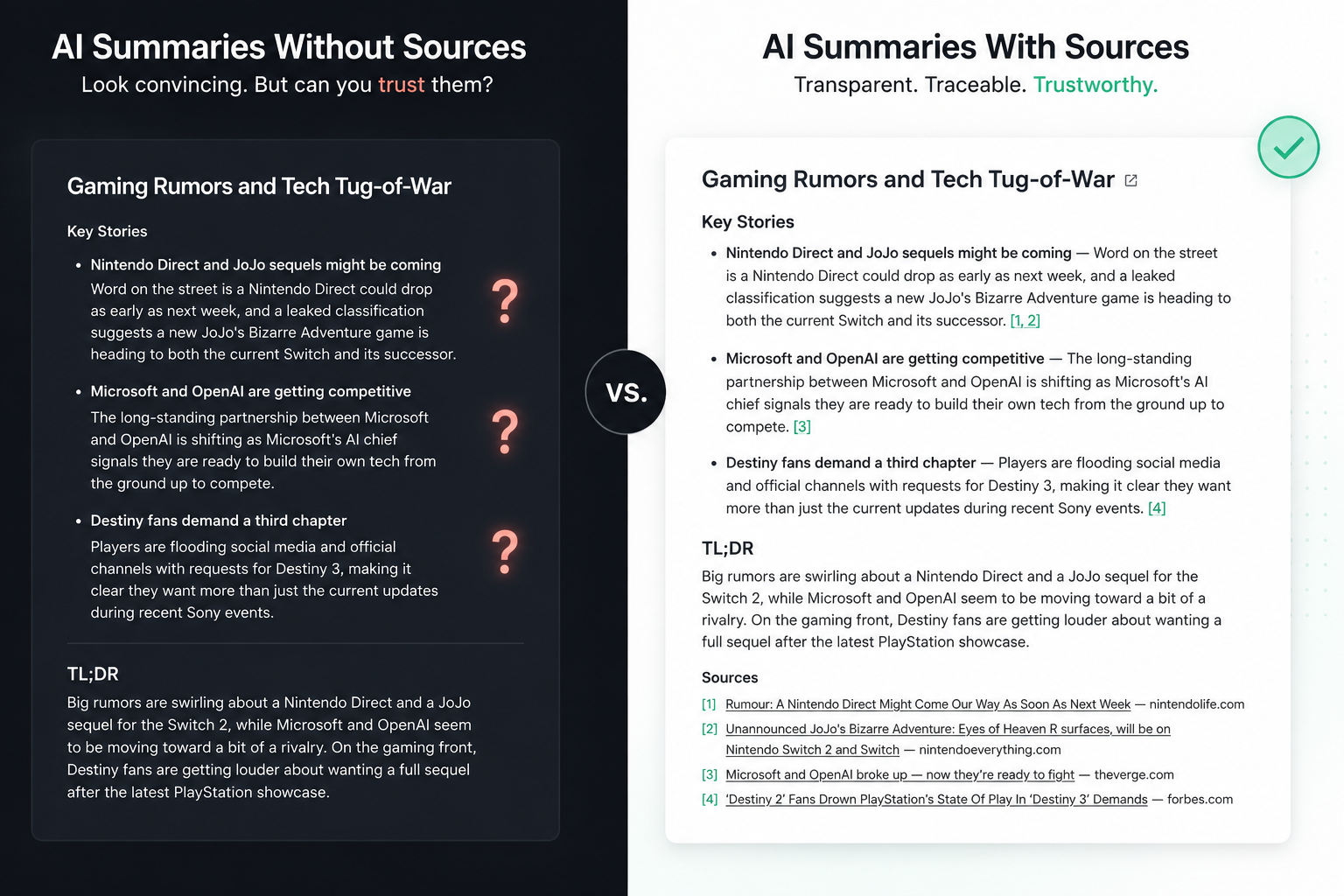
The limitations of AI-generated content
Users are rapidly becoming accustomed to AI experiences like Perplexity, where every claim can be traced back to a source. That expectation is beginning to extend beyond AI search and into AI-generated newsletters, digests, and briefs.
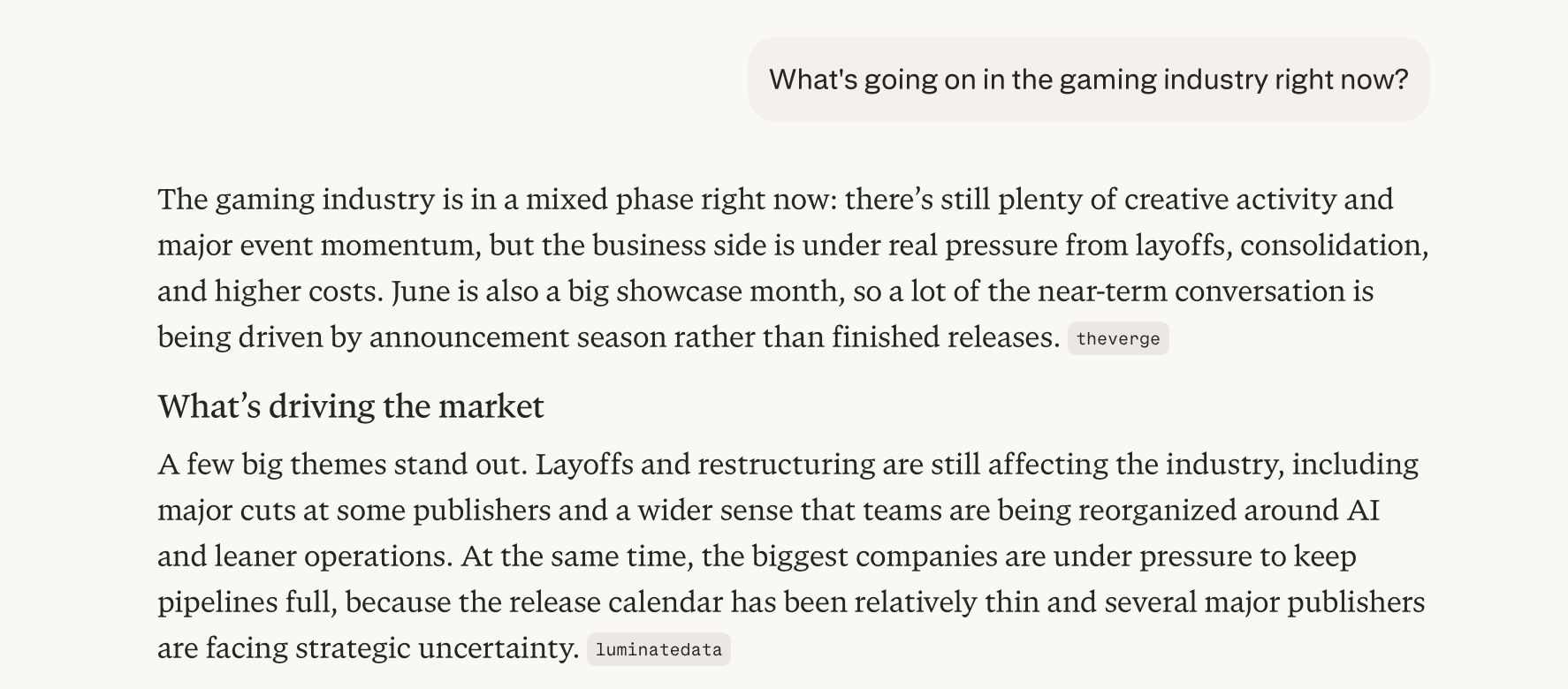
Ask yourself: when was the last time an AI summary told you something surprising, and you had no way to check if it was true?
It happens constantly. An AI brief says "company X is pivoting to enterprise" or "regulation Y passed last month", and there's no link, no source, no trail. Just a confident paragraph sitting there, asking to be believed.
This isn't a small UX issue. It's a trust architecture problem.
AI models hallucinate. They compress nuance. They pick up on the loudest signals in a feed and sometimes miss the important caveat buried in paragraph four of the actual article.
A summary without a source isn't just incomplete, it's unverifiable. And unverifiable information shouldn't be shared in professional contexts.
Why trust in AI matters
Think about how AI-generated content actually gets used. A marketing team reads a brief and decides to pause a campaign. A founder shares it with their board. A journalist uses it as a starting point for a story.
In each case, the information is being acted on, sometimes before anyone reads the original.
When those briefs don't link back to sources, a few things happen:
- Errors compound. One wrong summary gets shared, screenshot, forwarded. Nobody has an easy way to go back and check.
- Trust erodes. The more people get burned by confident-but-wrong AI summaries, the less they trust the whole format. Tools that could genuinely save people hours get abandoned.
- Attribution disappears. Publishers and creators who produce the original reporting lose traffic, credit, and incentive. That's bad for the entire information ecosystem.
This isn't hypothetical. It's already happening.
The citation problem is solvable
The good news is that adding source attribution to AI briefs isn't technically hard. It requires the tool to track which articles fed which sentences in the summary and then surface that relationship to the reader.
That's it.
Done well, it looks a lot like how Perplexity handles search results, or how academic papers handle footnotes. The summary becomes something you can trust and verify. Click the citation, read the source, confirm the claim.
Imagine receiving a daily AI Brief about your competitors. One sentence mentions that a rival is expanding into Europe. Instead of wondering where that claim came from, you can click the citation, open the original article, and verify the context yourself.
This is why RSS.app now includes the option to add links to original articles in AI Briefs.
Not as a feature checkbox. As a deliberate position on what good AI-generated content should look like.
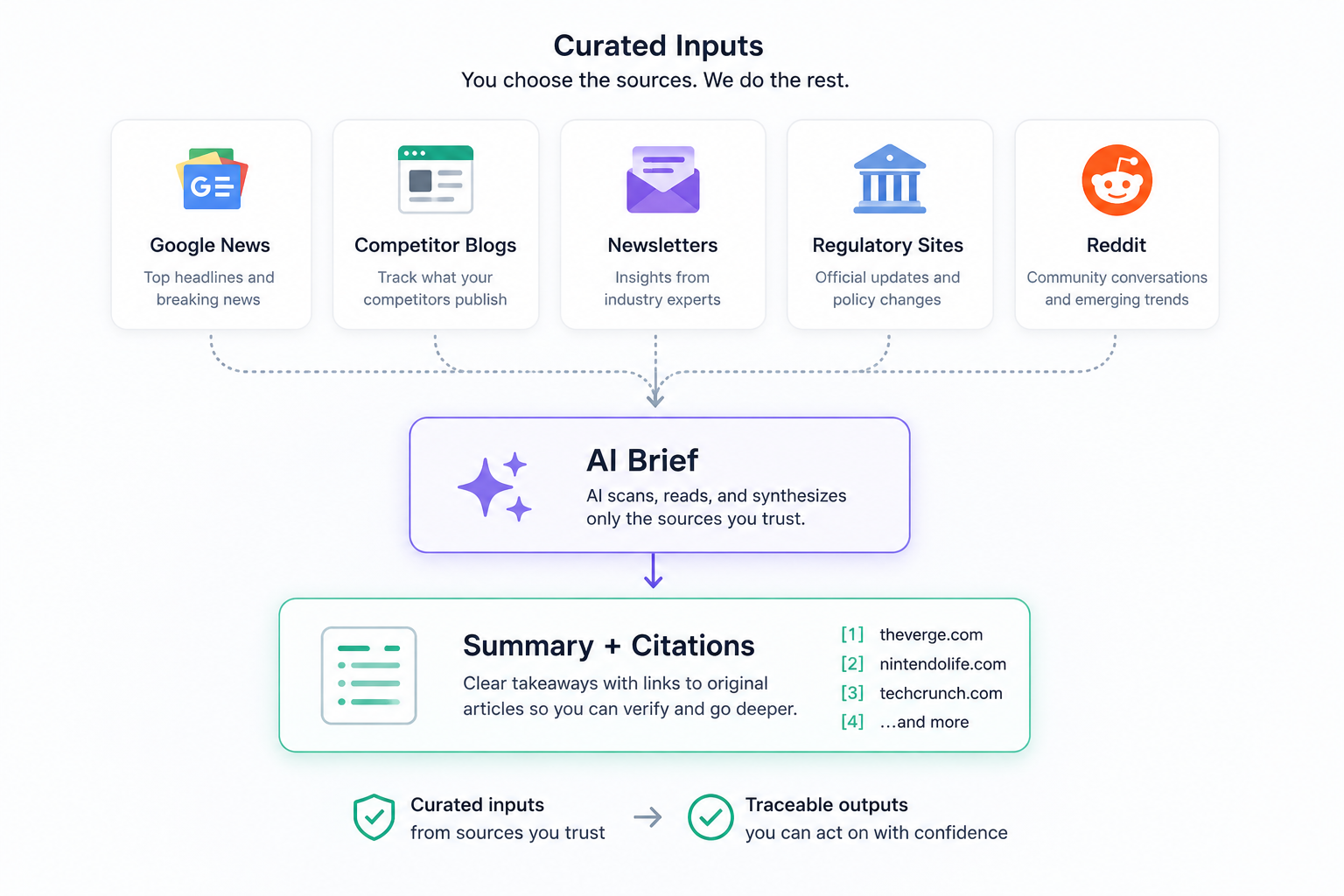
AI Briefs in RSS.app already start with an advantage: you decide what information goes in.
Instead of relying on whatever a general-purpose AI model happens to retrieve from across the web, you can build briefs from curated sources: industry publications, competitor blogs, Google News searches, regulatory websites, newsletters, or your own collection of feeds.
That means you're not asking AI to summarize the entire internet. You're asking it to synthesize information from sources you already trust.
Adding links to the original articles takes that one step further. The inputs are transparent, and now the outputs are traceable too.
How it works in RSS.app
When generating an AI Brief, there are now four ways to display links to original articles, plus the option to disable links entirely.
1. Article Links
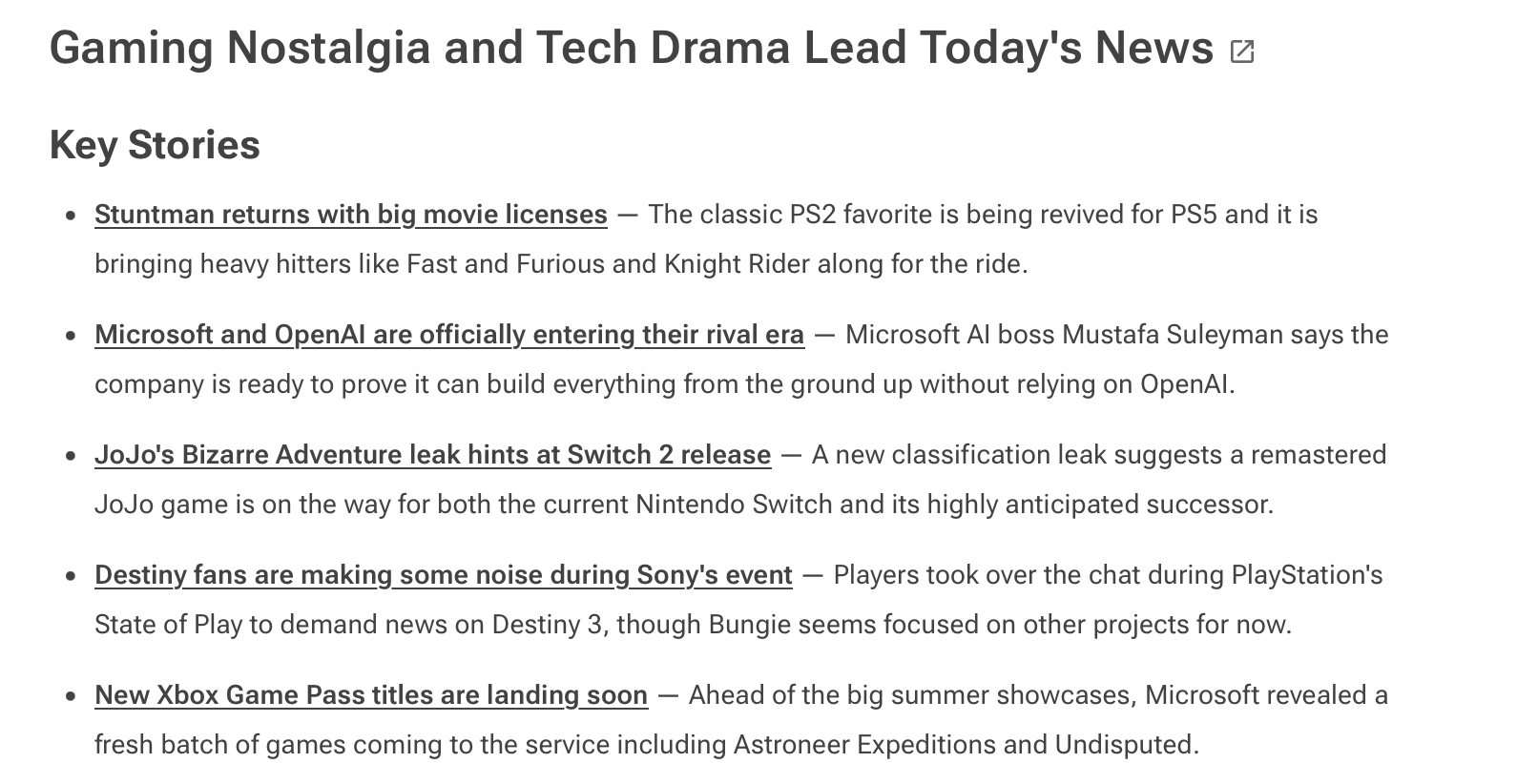
The title of each story becomes a clickable link. Clean and simple. Readers can go deep if they want, or just skim the summary.
2. Read More
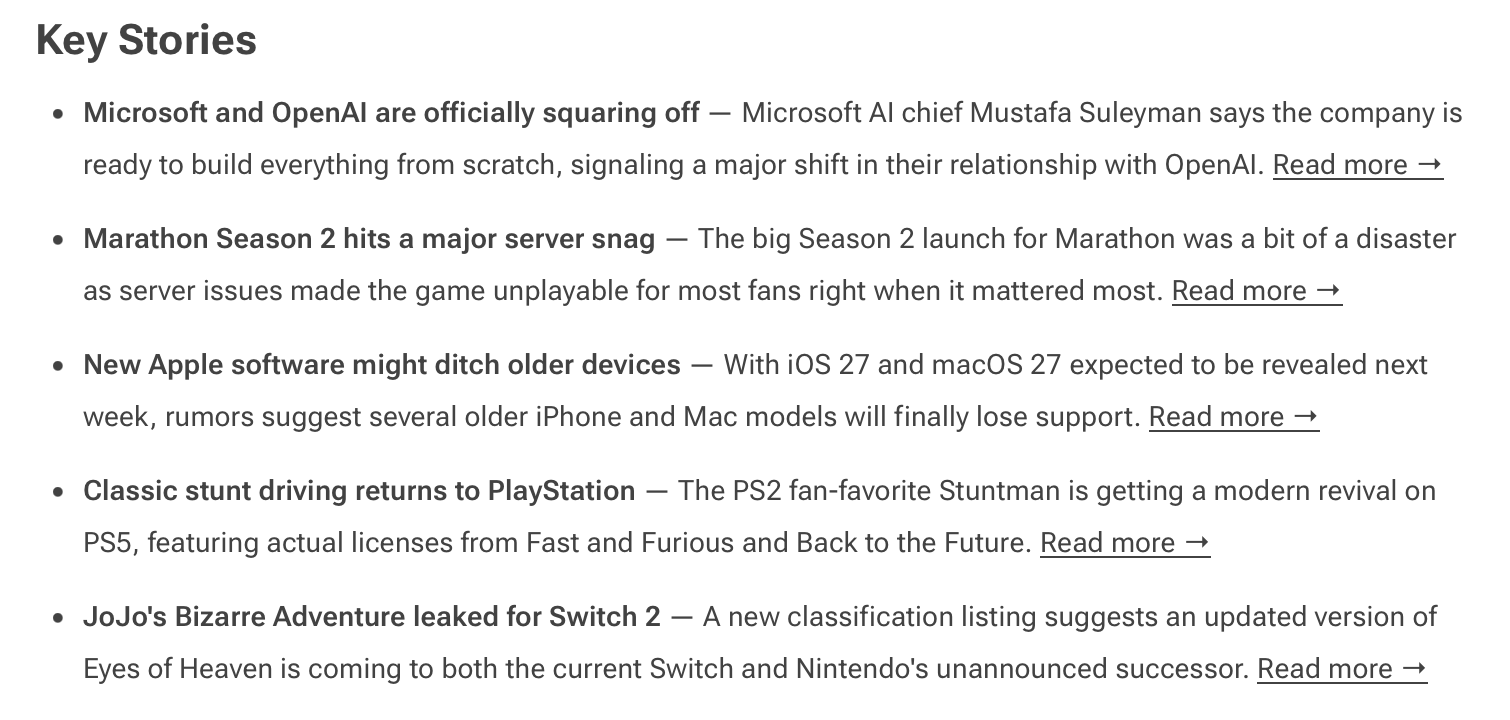
A "Read more" link appears at the end of each section. Better when the summary should stand on its own, but readers need an easy path to the full article.
3. Source Chip
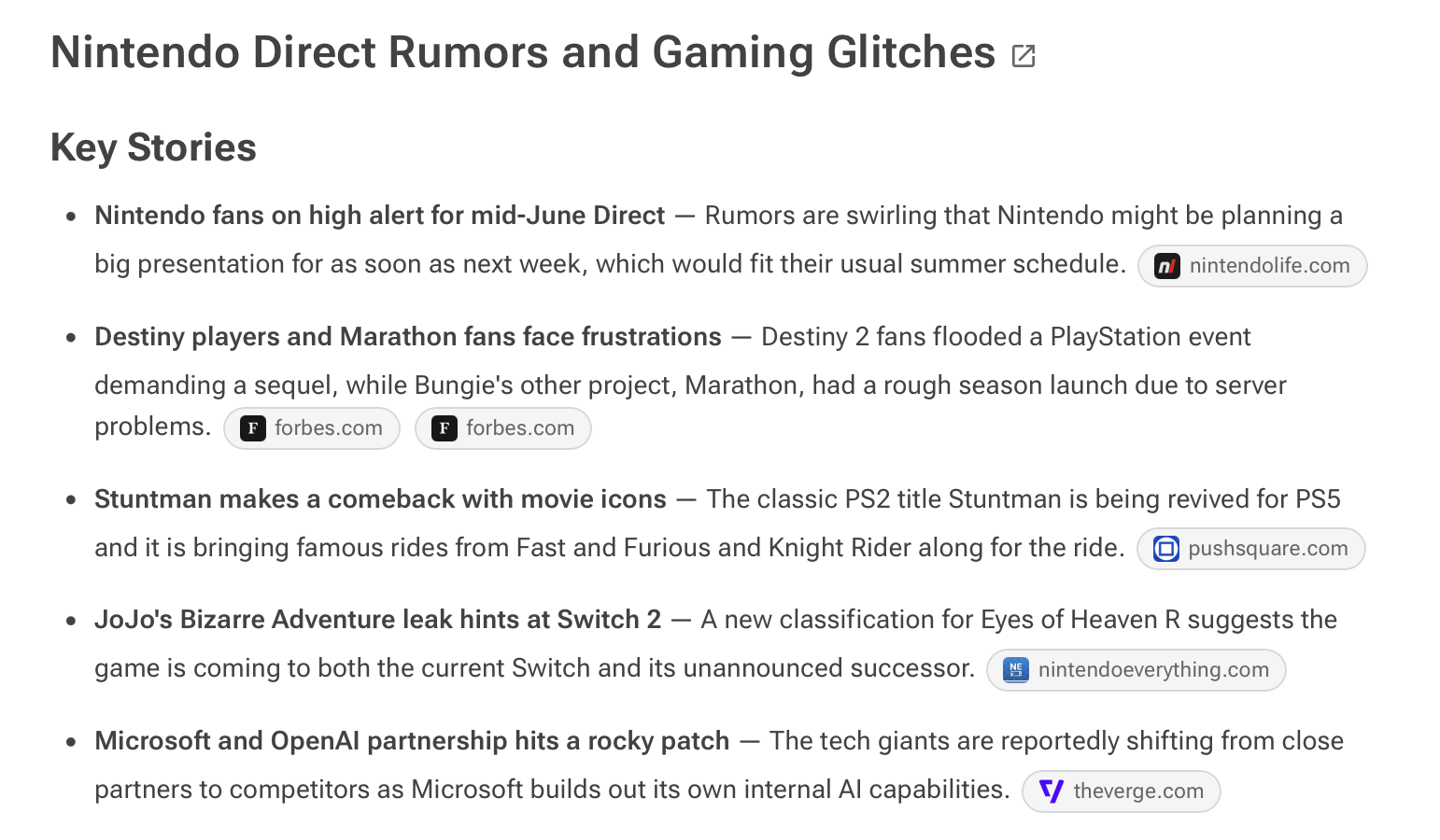
A small badge showing the source publication appears below each story. Useful when the credibility of the source matters as much as the content itself.
4. Citations
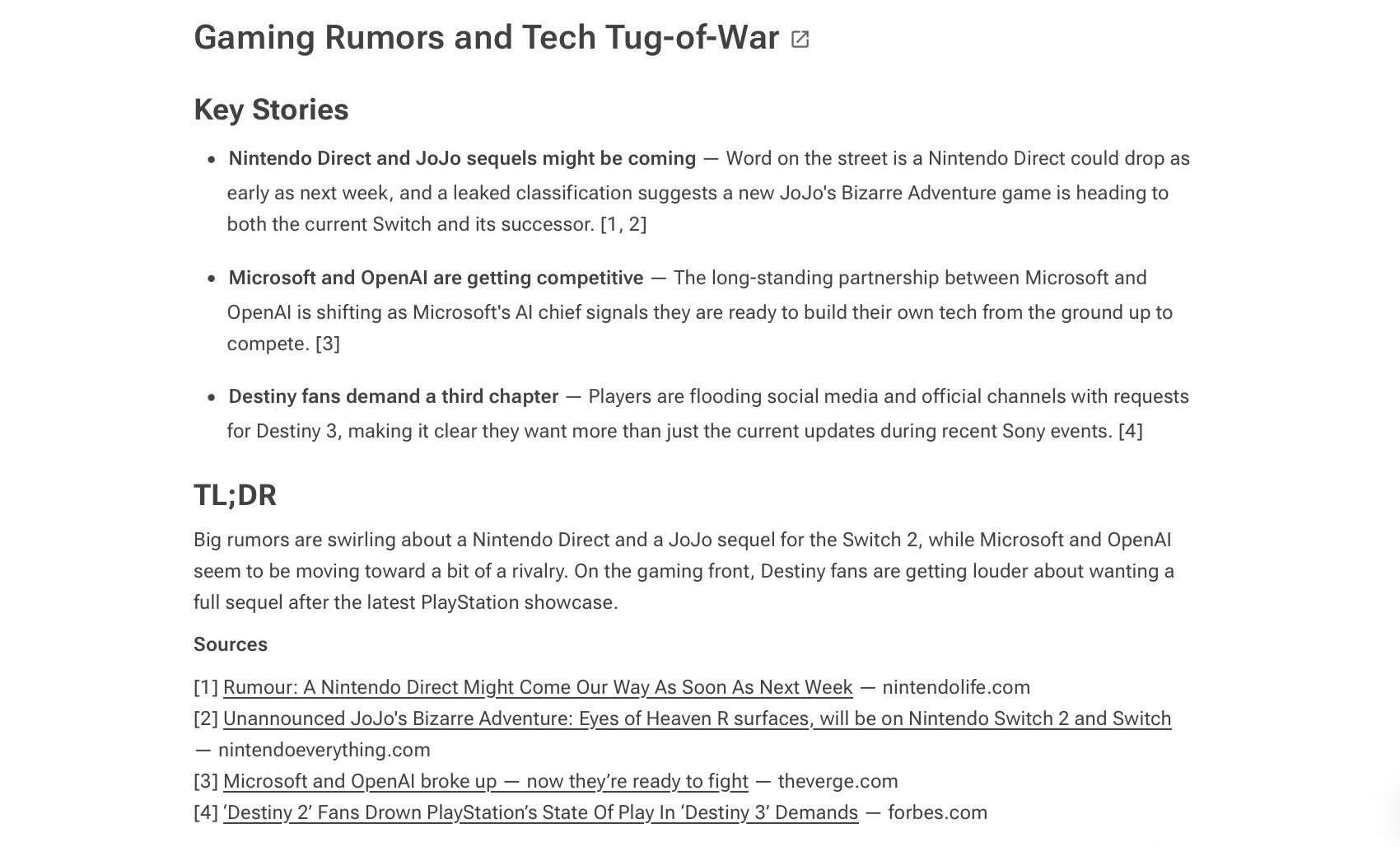
The most rigorous option. Individual sentences in the AI-generated text are tagged with references to the specific articles that informed them. Readers can see exactly where each claim came from.
Off
For contexts where links aren't needed or would clutter the output.
The Citations format in particular is worth pausing on. It mirrors the way AI search tools like Perplexity and ChatGPT with web search handle attribution, where the output isn't just a confident paragraph but a transparent, traceable summary. That standard is quickly becoming what users expect from any serious AI content tool.
What this changes
Adding source links doesn't just protect readers from bad information.
Summaries become starting points, not endpoints.
Readers who want more can go get more. Readers who spot something off can trace it back. Teams sharing briefs internally can point colleagues to the original reporting when it matters.
It also changes the economics slightly. Publishers whose articles feed the brief get a path to traffic. That's not nothing; it's part of what keeps good journalism funded and available.
Most importantly, it shifts AI Briefs from "content to consume" into “content to trust.” That's a different category of product. And it's the right direction.
The standard worth holding
The AI content tools that survive the next few years won't be the ones that generate the most output. They'll be the ones that generate output people can act on with confidence.
Confidence requires traceability. Traceability requires sources.
As AI-generated summaries become more common, source attribution is likely to become an expected part of the experience rather than an optional extra.
RSS.app's position is clear.
AI Briefs should be transparent by default.
Go try the Citations format. See what it feels like to read a summary you can actually verify.
Want to try RSS feeds?
Create your first feed in minutes. Free to start, no credit card required.
Share this article



Ready to get started?
Create your first RSS feed in minutes. No coding required.